
MacBook Air M4 vs Dell XPS 13 vs Surface Laptop 7 (2025)
MacBook Air M4, Dell XPS 13, or Surface Laptop 7? We break down performance, battery, display, and value to find the best 13-inch laptop for 2025.
VS Quick Verdict

Apple
MacBook Air 13-inch M4
$850
Deals LikelyNewer model likely available — look for deals on this one
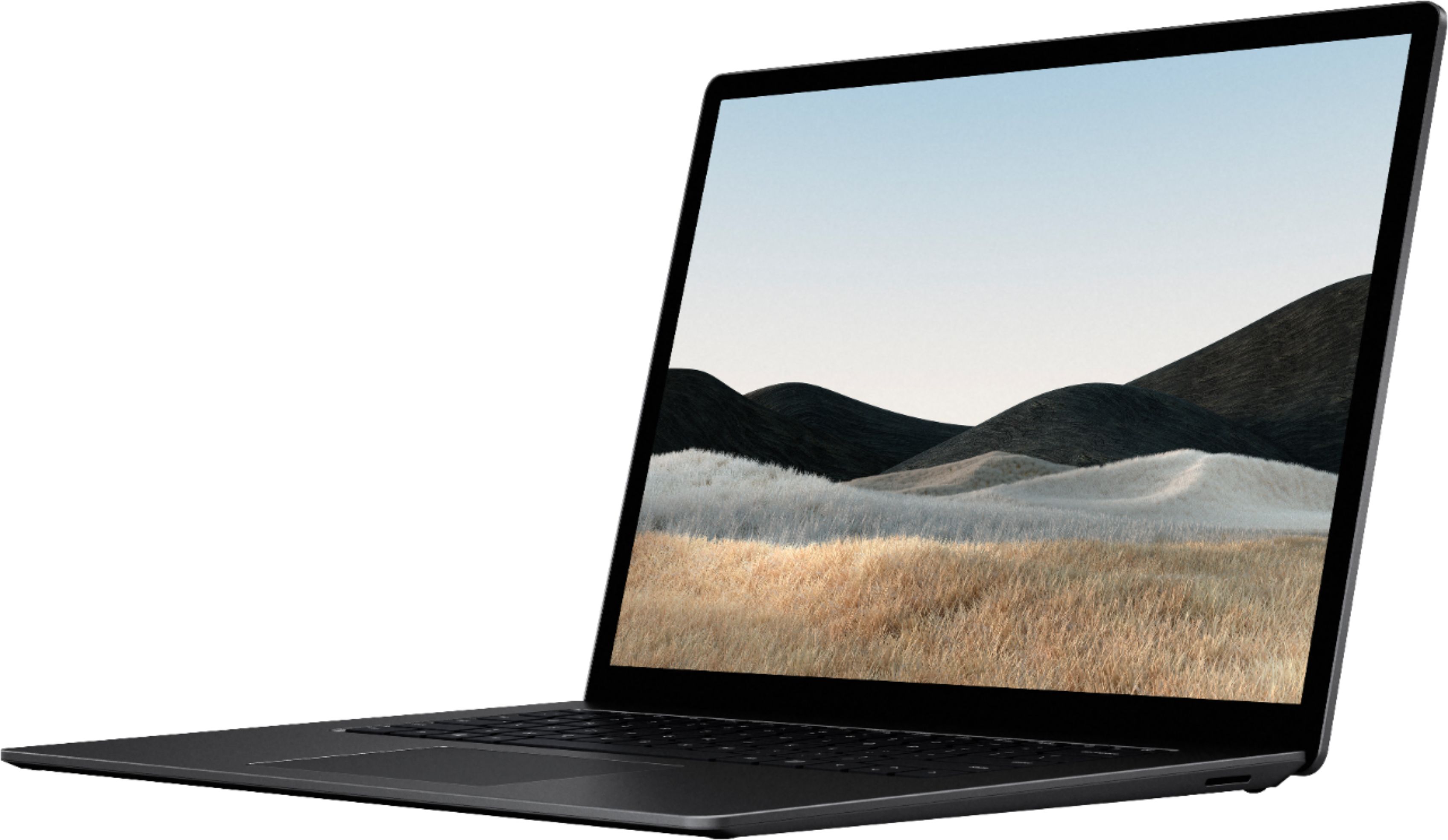
Microsoft
Surface Laptop 7
$720
Deals LikelyNewer model likely available — look for deals on this oneDesign & Build
All three laptops are genuinely well-built. But they take different approaches to what "premium" means.
The MacBook Air M4 sticks with Apple's proven wedge-shaped aluminum chassis. At 2.7 lbs, it's the lightest of the three. Reviewers at AllReviews consistently praise the build quality, describing it as solid without feeling heavy. The MagSafe charging port returns, which is genuinely useful, though you're still limited to two USB-C/Thunderbolt ports total. That's a real constraint for anyone with a multi-device desk setup.
The Dell XPS 13 has undergone a significant redesign in recent generations, moving to a more squared-off, compact form factor. It's slightly heavier than the Air but packs in more port variety, including a USB-A port on some configurations. The CNC-machined aluminum frame feels premium, and Dell's keyboard deck has improved considerably. Some reviewers have noted the webcam placement remains awkward on certain configurations.
The Surface Laptop 7 is Microsoft's most refined laptop design to date. The alcantara fabric option on lower tiers divides opinion, but the all-metal configurations feel genuinely excellent. It's the heaviest of the three at around 2.96 lbs, though still very portable. Microsoft includes a USB-A port and a Surface Connect port alongside USB-C, giving it the most practical everyday port selection of the group.
Section winner: MacBook Air M4. The combination of lightest weight, premium aluminum construction, and Apple's refined aesthetic gives it a narrow edge, though the Surface Laptop 7 is a close second on build quality.
Performance
This is where the MacBook Air M4 separates itself most clearly.
Apple's M4 chip is a genuine step forward. According to reviewer benchmarks cited across multiple publications, the M4 delivers Geekbench 6 multi-core scores in the range of 15,000 to 16,000, a meaningful jump over the M3. More importantly, it does this without a fan. The MacBook Air M4 is completely fanless, meaning it stays silent under sustained loads. Reviewers at AllReviews note that M4 performance handles most workflows smoothly, covering video editing, photo processing, and heavy browser workloads without thermal throttling becoming a visible problem in typical use sessions.
The Dell XPS 13 runs Intel's latest Core Ultra processors (Series 2 in current configurations), which bring improved efficiency over prior generations. Cinebench R23 multi-core scores land around 12,000 to 13,000 in independent testing, competitive for the Windows ultrabook class but trailing the M4 in raw throughput. The XPS 13 does have a fan, which kicks in under sustained load. It's not loud, but it's audible.
The Surface Laptop 7 ships with Qualcomm Snapdragon X Elite or X Plus processors depending on configuration, Microsoft's push into ARM-based Windows computing. Benchmark results are promising, with Snapdragon X Elite multi-core scores approaching Intel Core Ultra territory. However, app compatibility on Windows ARM remains an ongoing consideration. Most major applications run fine through emulation, but professional software with no native ARM build can show performance penalties. Reviewers note this is improving rapidly but isn't fully resolved.
Section winner: MacBook Air M4. Fanless sustained performance at this level remains genuinely impressive, and the M4's benchmark lead over both competitors is consistent across independent testing sources.
Display
Display quality is a genuine differentiator at this price point, and all three machines take noticeably different approaches.
The MacBook Air M4 uses a 13.6-inch Liquid Retina IPS panel running at 2560x1664. It's bright, color-accurate, and sharp. Apple quotes 500 nits peak brightness, and reviewers confirm real-world brightness holds up well outdoors. The display covers the P3 wide color gamut. What it lacks is ProMotion high refresh rate, which stays exclusive to the MacBook Pro line. You're getting 60Hz here.
The Dell XPS 13 offers OLED display options on higher configurations, which is a significant advantage for anyone who prioritizes contrast and color vibrancy. OLED panels deliver true blacks and excellent HDR performance that IPS simply can't match. The base configuration uses an IPS panel, so check the specific SKU you're buying. The XPS 13's display is also slightly smaller in usable area due to its more compact chassis dimensions.
The Surface Laptop 7 uses a 13.8-inch PixelSense Flow IPS display with a 120Hz refresh rate. That higher refresh rate makes everyday scrolling and UI interactions feel noticeably smoother than the MacBook Air's 60Hz panel. Microsoft's display calibration is excellent, with strong color accuracy out of the box.
Section winner: Dell XPS 13 (OLED configuration). The OLED panel's contrast advantage is hard to argue with for media consumption and creative work. If you're comparing base configurations only, the Surface Laptop 7's 120Hz panel gives it an edge over the MacBook Air's 60Hz screen.
Battery Life
Battery life is one of the MacBook Air M4's most compelling arguments, and the numbers back it up.
Apple rates the MacBook Air M4 at 18 hours of battery life. Reviewer testing consistently lands in the 14 to 17 hour range under real-world mixed workloads, which is exceptional for a fanless 13-inch machine. Clara Mercer at AllReviews notes the battery lasts all day and then some, which reflects what most professional reviewers have found. Charging via MagSafe or USB-C is straightforward, though fast charging requires Apple's 70W adapter rather than the included cable-and-brick combination on base models.
The Dell XPS 13 with Intel Core Ultra processors delivers more modest battery results. Independent testing places real-world battery life in the 8 to 11 hour range depending on workload and screen brightness. That's adequate for a full workday with careful management, but it's not the worry-free experience the MacBook Air provides. Charging speed is competitive, with USB-C PD support.
The Surface Laptop 7 benefits from Qualcomm's power-efficient ARM architecture. Microsoft claims up to 22 hours, and while real-world results fall short of that, reviewers consistently find 12 to 15 hours of mixed use, making it the closest Windows competitor to the MacBook Air on battery endurance. It also supports fast charging and reaches 80% in around an hour.
Section winner: MacBook Air M4. Consistent real-world battery life in the 14 to 17 hour range, combined with a fanless design that doesn't spike power draw under moderate loads, keeps Apple ahead here. The Surface Laptop 7 is a strong second.
Value for Money
All three machines start at or near $999, but what you actually get at that price varies considerably.
The MacBook Air M4 at $999 MSRP includes 16GB of unified memory and 256GB of SSD storage. The 256GB base storage is genuinely tight in 2025, and Ethan Mercer at AllReviews calls it out directly: 256GB is too small at this price. Upgrading to 512GB adds $200, pushing the more practical configuration to $1,199. That said, Amazon frequently lists the base model at $849.99 and Best Buy at $899, which meaningfully improves the value equation. The M4's performance-per-dollar at those street prices is difficult to beat.
The Dell XPS 13 base configuration typically includes 16GB RAM and 512GB storage, which is a better starting point on storage. OLED display upgrades add cost but deliver a tangible quality improvement. Dell's pricing has historically been aggressive during sales periods, making the XPS 13 a strong value proposition when discounted.
The Surface Laptop 7 at $999 also starts with 16GB RAM and 256GB storage on some configurations, with 512GB options available at higher price points. Microsoft's build quality and the included Windows 11 experience are polished, but the Snapdragon app compatibility questions add a small but real risk factor for certain professional users.
Section winner: MacBook Air M4 (at street price). At $849 to $899 from major retailers, the M4's combination of performance, battery life, and build quality represents the strongest overall package. The storage limitation is real, but the performance advantage compensates at these prices.
Who Should Buy What?
Get the MacBook Air M4 if you:
- Are already in the Apple ecosystem or open to macOS
- Prioritize battery life above almost everything else
- Want the best fanless performance available in a 13-inch laptop
- Travel frequently and want the lightest, most capable option
- Can find it at the $849 to $899 street price
Get the Dell XPS 13 if you:
- Need Windows and want the best display quality, particularly OLED
- Value a more complete port selection without adapters
- Do color-critical creative work where OLED contrast matters
- Catch it on sale, where its value proposition strengthens considerably
Get the Surface Laptop 7 if you:
- Want the best Windows-native laptop experience available
- Need strong battery life but must stay on Windows
- Prefer Microsoft's cleaner software approach over Dell's
- Use primarily mainstream applications with confirmed ARM compatibility
Final Verdict
The MacBook Air M4 wins this comparison, and it's not particularly close in aggregate. A 9.4/10 rating from professional reviewers reflects what the numbers consistently show: no other 13-inch laptop at this price delivers the combination of fanless sustained performance, 14-plus hours of real-world battery life, and premium build quality that Apple's M4 chip makes possible.
The Dell XPS 13 earns its place as the best Windows option for display-focused users, and the OLED configuration is genuinely excellent. The Surface Laptop 7 is Microsoft's most competitive laptop yet, with battery life that finally challenges Apple's dominance in that category. Neither machine is a bad choice.
But the MacBook Air M4, especially at its $849 to $899 street price, is the one most people should buy. The port limitations are real. The base storage is too small. The M3-to-M4 gains are incremental rather than dramatic. All of that is true, and reviewers at AllReviews have said so directly. Even accounting for those legitimate criticisms, no competing 13-inch laptop in this price range matches the overall package. The MacBook Air M4 is the clear pick for 2025.
Where to Buy
More Laptops Comparisons
ROG Zephyrus G14 vs Razer Blade 16 vs ROG Zephyrus G16: Gaming Laptops
Asus ROG Zephyrus G14 vs Razer Blade 16 vs Asus ROG Zephyrus G16
MacBook Pro 16 vs Razer Blade 16 vs ROG Zephyrus G14: Performance Showdown
Apple MacBook Pro 16-inch M4 Pro vs Razer Blade 16 vs Asus ROG Zephyrus G14
Dell XPS 13 vs Lenovo Yoga Slim 7i vs ThinkPad X9 15: Ultrabook Battle
Dell XPS 13 vs Lenovo Yoga Slim 7i Ultra Aura Edition vs Lenovo ThinkPad X9 15 Aura Edition
Affiliate Disclosure: We may earn a commission when you buy through links on our site. This does not influence our editorial recommendations. Learn more about how we make money