
Dell Alienware AW3423DW vs ASUS ROG Swift OLED PG27AQDM (2024)
Dell's ultrawide QD-OLED battles ASUS's 240Hz OLED gaming monitor. We analyze performance, value, and real-world testing to declare a definitive winner.
VS Quick Verdict

Design & Build
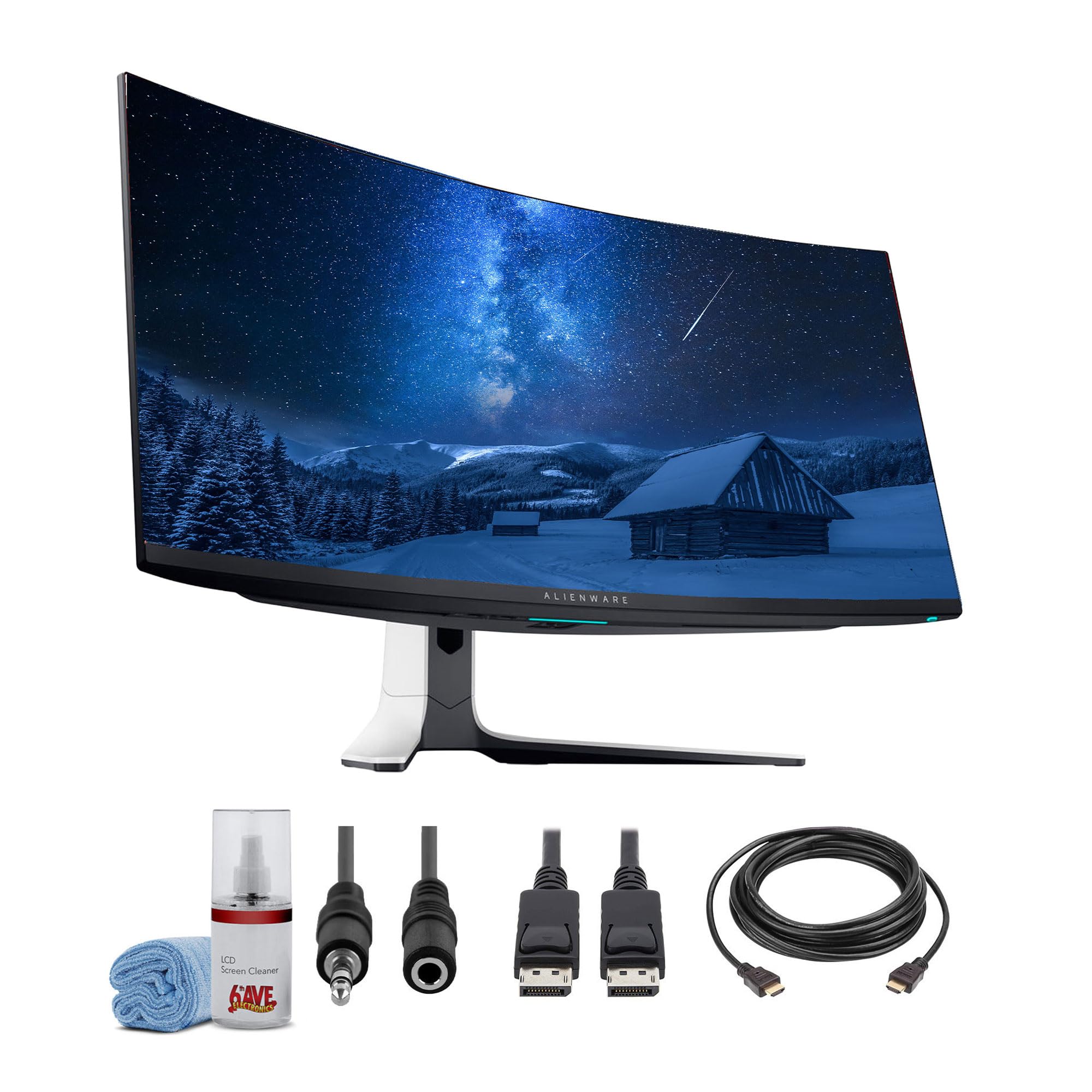
The Dell Alienware AW3423DW dominates physically. At 34 inches with a 1800R curve, it commands desk space and wraps around your field of view. The build quality feels premium with a sturdy stand and minimal bezels. According to Digital Trends, the design is "groundbreaking" with an aesthetic that justifies the Alienware branding. The glossy coating does attract fingerprints, but that's the trade-off for the stunning QD-OLED panel underneath.
The ASUS ROG Swift OLED PG27AQDM takes a more conservative approach. It's a flat 27-inch panel with ASUS's typical gaming aesthetic, understated but solid. Tom's Hardware praised the build quality as "exceptional," and the stand offers full ergonomic adjustments. The flat panel makes it easier to fit into multi-monitor setups, but it lacks the immersive presence of Dell's curved ultrawide.
Both monitors skip built-in speakers, which is frustrating at these price points. The ASUS particularly stings here since you're paying $869 and still need external audio. Winner: Dell Alienware AW3423DW for the immersive ultrawide form factor that actually changes how games feel.
Performance
Here's where things get interesting. The ASUS ROG Swift pushes 240Hz with a 0.03ms response time that RTINGS called "incredible motion clarity." For competitive shooters and esports, that extra refresh rate headroom matters. You can actually see the difference between 175Hz and 240Hz if you're playing Counter-Strike or Valorant at high frame rates.
But the Dell Alienware AW3423DW counters with QD-OLED technology that Hardware Unboxed said "makes everything else look dated." The quantum dot layer delivers wider color gamut and better color volume than the ASUS's WOLED panel. Both have near-instant response times, both support G-Sync, and both deliver perfect blacks. The real performance difference is 65Hz of refresh rate versus superior color science.
For most gamers, 175Hz is plenty. According to Ars Technica, the Dell's "OLED advantages" shine brightest in single-player games where color and contrast matter more than raw refresh rate. The ASUS wins if you're chasing every competitive advantage, but that's a narrow use case. Winner: Dell Alienware AW3423DW for delivering better overall image quality that benefits every game, not just competitive shooters.
Display Quality
Both monitors use OLED technology, so both deliver perfect blacks and infinite contrast. But QD-OLED versus WOLED isn't just marketing speak. The Dell's quantum dot layer produces more saturated colors and better color accuracy at higher brightness levels. CNET's 9.4/10 review specifically highlighted the "impressive OLED display" that outperforms traditional OLED in color volume.
The ASUS hits 97% DCI-P3 coverage without calibration, which is excellent. But reviewers consistently noted that the Dell's QD-OLED panel looks more vibrant and punchy in HDR content. Digital Trends gave the Dell a 9.5/10 and called it "stunning OLED quality" that sets a new standard.
Resolution tells another story. The Dell's 3440 x 1440 ultrawide gives you 33% more horizontal pixels than the ASUS's standard 2560 x 1440. That extra screen real estate is transformative for immersive games and productivity work. The ASUS's 27-inch 1440p looks sharp, but it's the same resolution gamers have been using for years. Winner: Dell Alienware AW3423DW for superior color science and more usable screen space.
HDR Performance
The Dell Alienware AW3423DW supports HDR1000 certification, though aggressive automatic brightness limiting (ABL) prevents it from sustaining peak brightness across the entire screen. Reviewers found this frustrating in practice. When HDR content fills the screen, brightness drops to protect the OLED panel from burn-in.
The ASUS ROG Swift uses DisplayHDR True Black 400, a lower certification that's more honest about what OLED can actually deliver. RTINGS noted that while peak brightness is lower, the HDR experience feels more consistent because there's less aggressive ABL kicking in.
Neither monitor delivers the sustained brightness of high-end LCD panels with full-array local dimming. But OLED's perfect blacks create HDR contrast that LCD can't match. The Dell's higher peak brightness gives it an edge in bright highlights, even if ABL limits real-world impact. Winner: Dell Alienware AW3423DW for higher HDR certification and better peak brightness when it matters.
Gaming Experience
This is where the monitors diverge most clearly. The Dell Alienware AW3423DW creates an immersive gaming experience that standard monitors simply can't replicate. Racing games, flight sims, and open-world RPGs benefit enormously from the ultrawide field of view. Hardware Unboxed said it "makes everything else look dated," and that's not hyperbole. Once you game on an ultrawide, going back to 16:9 feels claustrophobic.
The ASUS ROG Swift OLED PG27AQDM excels at competitive gaming. That 240Hz refresh rate and 0.03ms response time deliver what Tom's Hardware called "exceptional gaming performance." If you play Apex Legends, Valorant, or CS2 competitively, the extra frames and instant response give you a measurable advantage.
But here's the reality: most gamers don't play competitively. Most people play a mix of single-player adventures, co-op games, and casual multiplayer. For that majority, the Dell's immersive ultrawide experience adds more value than the ASUS's competitive edge. Winner: Dell Alienware AW3423DW for delivering a transformative gaming experience that benefits every genre.
Burn-In Risk
Let's address the elephant in the room. Both monitors use OLED technology, and both carry burn-in risk. Static UI elements, taskbars, and game HUDs can permanently damage the panel over time. This isn't theoretical. It's a real concern that reviewers consistently mentioned.
The Dell includes a three-year warranty that covers burn-in, which provides some peace of mind. The ASUS also has burn-in protection features like pixel shifting and screen savers, but warranty coverage varies by region. According to RTINGS, both monitors require "vigilant pixel management" to minimize risk.
Neither monitor wins here because both share the same fundamental limitation of OLED technology. If you're paranoid about burn-in, you shouldn't buy either monitor. But if you're willing to manage the risk with sensible precautions, both manufacturers have implemented protections. Winner: Tie. OLED burn-in is a concern for both, and neither has solved it completely.
Connectivity & Features
The Dell Alienware AW3423DW offers DisplayPort 1.4, two HDMI 2.0 ports, and a USB hub. It's adequate but not impressive for a $1,300 MSRP monitor. The lack of HDMI 2.1 limits console gaming to 4K60 instead of 4K120, though the ultrawide resolution isn't ideal for consoles anyway.
The ASUS ROG Swift OLED PG27AQDM has similar connectivity: DisplayPort 1.4 and HDMI 2.0 ports. For an $869 monitor in 2024, this feels dated. Both monitors lack USB-C, which is increasingly standard on premium displays. Neither has built-in speakers, which is annoying at these price points.
The Dell at least includes G-Sync Ultimate certification, which provides better variable refresh rate performance than the ASUS's standard G-Sync Compatible. But both monitors handle VRR well in practice. Winner: Dell Alienware AW3423DW by a hair for G-Sync Ultimate, though both monitors are disappointing in connectivity.
Value for Money
Here's where the Dell Alienware AW3423DW pulls decisively ahead. At $710 on Amazon (down from $1,300 MSRP), you're getting a 34-inch QD-OLED ultrawide with 175Hz refresh and HDR1000 for $158 less than the ASUS. That's exceptional value for what you're actually receiving.
The ASUS ROG Swift OLED PG27AQDM costs $869 for a 27-inch 1440p monitor with no speakers and basic connectivity. Yes, you get 240Hz refresh, but you're paying premium prices for a resolution that's been standard for years. The price-to-performance ratio doesn't add up unless you specifically need that 240Hz for competitive gaming.
Both monitors were overpriced at MSRP, but the Dell's discount makes it a genuinely compelling purchase. You're getting more screen, better color technology, and an immersive form factor for less money. Winner: Dell Alienware AW3423DW by a landslide. Better specs, bigger screen, lower price.
Who Should Buy What?
Buy the Dell Alienware AW3423DW if you want an immersive gaming experience that transforms how games look and feel. It's the right choice for single-player adventures, racing games, flight sims, and anyone who values visual spectacle over competitive frame rates. The ultrawide format is genuinely transformative, and the QD-OLED panel delivers the best color and contrast available. At $710, it's also the better value.
Buy the ASUS ROG Swift OLED PG27AQDM if you play competitive shooters seriously and need every frame you can get. That 240Hz refresh and 0.03ms response time matter in esports, and the 27-inch flat panel fits better in multi-monitor setups. It's also the safer choice if you're worried about ultrawide compatibility in older games. But at $869, you're paying a premium for a narrower use case.
Don't buy either if you're paranoid about OLED burn-in or if you primarily use your monitor for productivity work with static elements. Both monitors require careful management to avoid permanent image retention.
Final Verdict
The Dell Alienware AW3423DW wins this comparison, and it's not particularly close. While the ASUS ROG Swift OLED PG27AQDM excels at competitive gaming with its 240Hz refresh rate, the Dell delivers a more transformative overall experience. The 34-inch QD-OLED ultrawide creates immersion that standard monitors can't match, the color science is superior, and you're getting all of this for $158 less.
According to Digital Trends' 9.5/10 review, the Dell represents "groundbreaking" OLED quality that sets a new standard. CNET's 9.4/10 rating praised its "impressive OLED display with excellent gaming performance." Hardware Unboxed said it "makes everything else look dated." The consensus is clear: this is the OLED gaming monitor to beat.
The ASUS is an excellent monitor for a specific audience, but the Dell serves more gamers better. Unless you're a competitive esports player who needs 240Hz, the Alienware AW3423DW is the smarter purchase. It costs less, delivers more screen, and provides better image quality. That's a winning combination that's hard to argue against.
Where to Buy
More Monitors Comparisons
Affiliate Disclosure: We may earn a commission when you buy through links on our site. This does not influence our editorial recommendations. Learn more about how we make money