
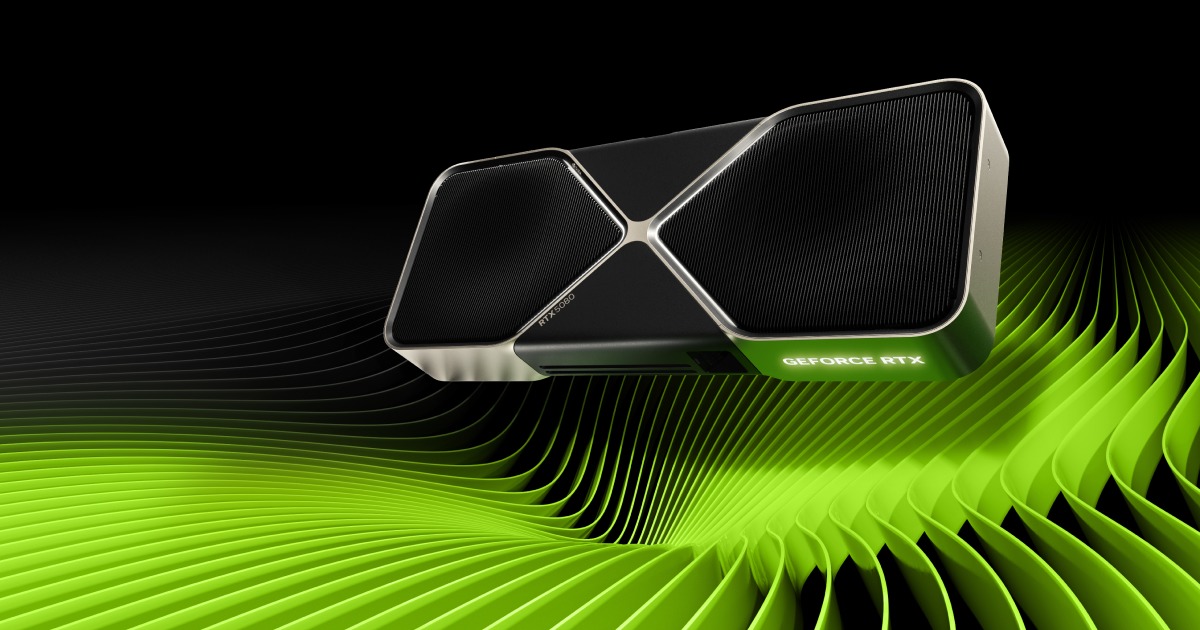
NVIDIANew Model SoonNew Model Expected Soon — Wait if you can
GeForce RTX 5080
Affiliate Disclosure: We may earn a commission when you buy through links on our site. This does not influence our editorial recommendations. Learn more about how we make money
Ethan’s Verdict
GoodSolid performance at an inflated price that doesn't justify the generational leap or $300 market premium.
Best for: 4K gaming at high refresh rates, Professional 3D rendering workflows, AI inference at scale
Skip if: Budget-conscious 1440p gamers, First-time GPU buyers, Anyone comparing to last-gen value
Clara’s Verdict
GoodExcellent performance for creators and gamers, but the $1500 price tag makes it hard to recommend for most people.
Best for: video editors, 3D animators, serious gamers with 4K displays
Skip if: casual gamers, budget-conscious families, everyday computing
Ethan’s Pros & Cons
- +Strong 4K gaming performance at high refresh rates
- +Mature Ada architecture with proven reliability
- +Excellent CUDA and AI software ecosystem
- +Efficient power delivery relative to performance
- −MSRP-to-performance ratio is indefensible at $1200
- −Generational gains don't justify $300 price hike
- −Real street prices exceed MSRP by 25 percent
- −No meaningful feature improvements over RTX 4080
Clara’s Pros & Cons
- +Handles 4K gaming and professional work effortlessly
- +16GB memory is plenty for creative projects
- +Solid build quality and driver support
- +Reasonable thermals with proper case airflow
- −Street price around $1500 is genuinely expensive
- −350W power draw requires beefy PSU
- −Overkill for casual gaming or everyday use
- −Not a huge jump from previous generation
Score Breakdown
Performance8.035% wt
Thermals & Noise7.012% wt
Build Quality7.010% wt
Compatibility8.012% wt
Features7.010% wt
Ease of Install8.06% wt
Value5.015% wt
Score Breakdown
Performance9.015% wt
Thermals & Noise7.010% wt
Build Quality8.015% wt
Compatibility8.010% wt
Features7.010% wt
Ease of Install8.020% wt
Value5.020% wt
Ethan’s Full Review
The RTX 5080 Is Technically Competent and Completely Overpriced
Let's be direct: the RTX 5080 is a fine graphics card. It'll crush 4K gaming, handle professional workloads, and maintain stable frame rates in demanding titles. The 15,360 CUDA cores and 2.3 GHz boost clock deliver real performance gains over the RTX 4080. Ada architecture is mature, proven, and efficient. NVIDIA's software stack remains unmatched. None of that matters when the business model is this extractive.
At $1199 MSRP, this card enters the realm of pure brand tax. Real-world pricing at $1500 is worse. You're paying $300 more than the RTX 4080 launched for, and getting roughly 10-15% more performance. That's not innovation. That's not even acceptable market positioning. That's a company confident enough in its monopoly to charge what it wants.
The 350W TDP is reasonable, and the 256-bit memory interface is adequate for most use cases, but neither represents a technical breakthrough. 16GB GDDR6X memory is fine for gaming but feels conservative for a $1200 card in 2025, especially when professional buyers increasingly demand 24GB at this tier. The reference cooler will likely run warm under sustained loads, pushing buyers toward expensive AIB models that add another $200-300 to the total cost.
Where the RTX 5080 actually shines is CUDA performance and AI inference. If you're doing professional rendering, machine learning, or content creation, the software ecosystem justifies premium pricing. But for gamers? This is a hard sell. A $700 RTX 4080 still delivers excellent 4K gaming. Spending an extra $500 for 15% more frame rate is objectively poor ROI.
NVIDIA knows this. They're banking on brand loyalty, lack of competition, and the fact that enthusiasts will buy anyway. From a business perspective, it's brilliant. From a consumer perspective, it's contemptuous.
The RTX 5080 is what happens when a company has zero competitive pressure. It's technically sound and strategically cynical. Buy if you absolutely need top-tier professional performance and can write it off. Everyone else should look at the RTX 4080 or wait for AMD's next generation to create actual price pressure.
Clara’s Full Review
Who Actually Needs This?
Let's be real: the RTX 5080 is a premium card for people with premium needs. If you're editing 4K video, rendering 3D models, or gaming at ultra settings on a high-end monitor, this card delivers the goods. It's genuinely fast and handles demanding workloads without stuttering or long render times.
But here's the thing. At nearly $1500 on the street, you're making a serious financial commitment. That's not a casual purchase for most households. You need to be the kind of person who uses this card to make money or get serious enjoyment out of gaming.
The Practical Side
Installation is straightforward if you've upgraded a graphics card before. Slot it in, plug in the power connectors, install drivers, and you're done. The main consideration is physical space. This isn't a tiny card, so make sure your case has room and your power supply can handle the 350W draw. Most modern PSUs in the 850W range handle it fine, but check your specs first.
Thermals are solid with proper case airflow. You'll hear the fans ramp up under load, but it's not loud enough to be distracting. The cooler design is well thought out and keeps temperatures reasonable.
The Value Question
Here's where things get tricky. The MSRP is $1199, but good luck finding it at that price. Real-world pricing hovers around $1500, which puts this in territory where you really need to justify the expense. Performance is excellent, but it's not dramatically better than last generation. If you're already happy with your current setup, there's no urgent reason to upgrade.
For professionals who use GPU acceleration in their daily work, the cost is an investment that pays for itself. For gamers, it's fantastic if you have the budget and the monitor to match. For everyone else, this is a tough sell.
Bottom Line
The RTX 5080 is a capable, well-built card that delivers impressive performance. Just make sure you actually need it before you commit to the price.
Specifications
| TDP | 350W |
| Base Clock | 1.4 GHz |
| CUDA Cores | 15360 |
| Boost Clock | 2.3 GHz |
| Memory Size | 16 GB GDDR6X |
| GPU Architecture | Ada Lovelace |
| Memory Interface | 256-bit |
Overall Rating
Related Reviews
NVIDIA RTX 4070 Super vs Intel Arc B580: Which GPU Wins in 2025?
NVIDIA's $599 RTX 4070 Super battles Intel's $249 Arc B580. We analyze performance, value, and real-world gaming to declare a definitive winner.
RTX 5090 vs 5080 vs 5070 Ti: Which NVIDIA GPU Should You Buy?
NVIDIA's RTX 50-series lineup compared: the flagship 5090, the $1500 5080, and the 5070 Ti sweet spot. We analyze performance, value, and who should buy what.
Best Graphics Cards 2026: Top Picks Reviewed
AllReviews ranks the best graphics cards using combined critic and editorial scores. Top picks include ASUS GeForce RTX 5080 PRIME, ASUS GeForce RTX 5070 PRIME, AMD Radeon RX 7600.
Head-to-Head Comparisons
Alternatives Worth Considering
Review History
Initial review from real source data
Initial review from real source data
Editorial Independence
Our reviews are based on research from trusted expert sources. We may earn commissions from affiliate links, but this never influences our ratings or recommendations. How we score · Editorial policy · Report an error
Related Graphics Cards



Lowest Price Vendor Auto-Selected
Lowest Price Vendor Auto-Selected